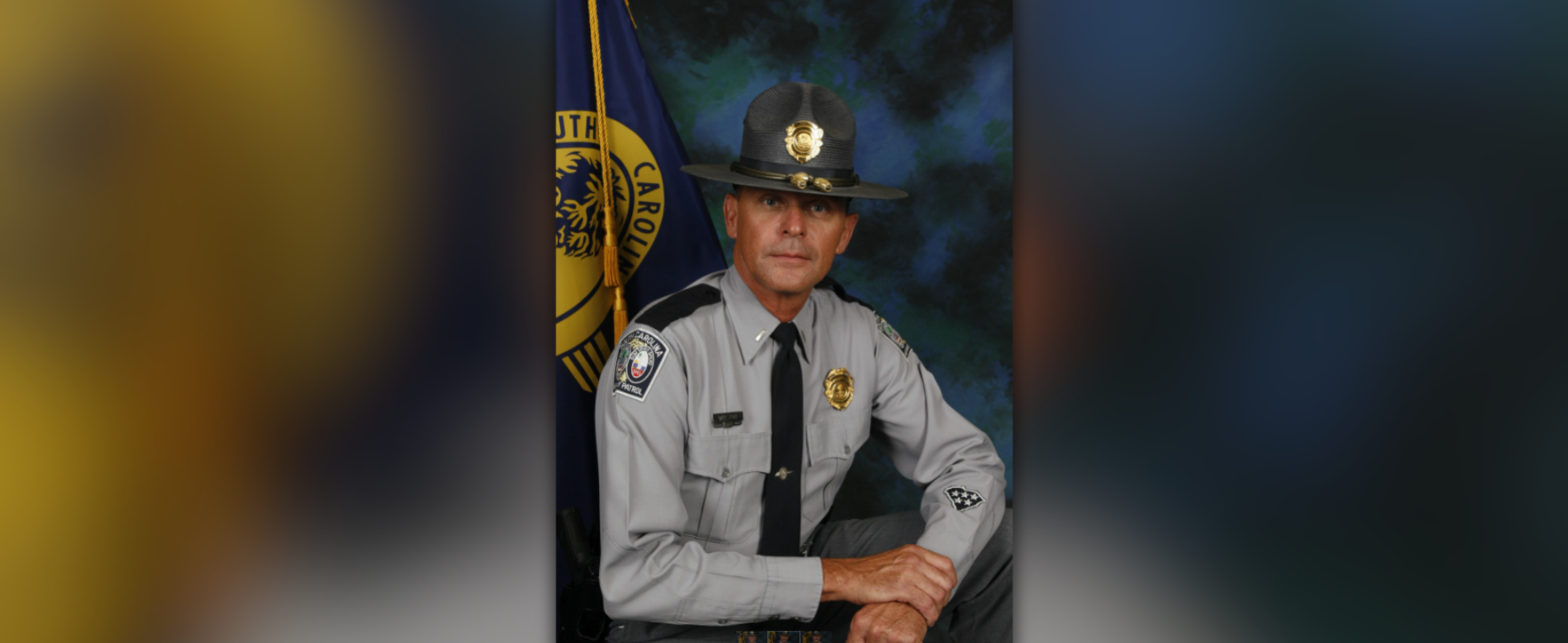
As the self-described “runt” of the family, it would have been difficult for Captain Russell Wilson to not follow in the footsteps of his brother, the late Major Steve “Snake” Wilson, when he joined the South Carolina Highway Patrol in 1982. After all, he was impressed by the crisp uniform, the tilt of the cowboy hat, and the high regard in which patrolmen were held.
“Snake always said I had to stand on my own and be me and not his little brother,” said Wilson, who joined the patrol 10 years after his brother. “He didn’t want me to live in his shadow.”
Although he and his brother wore the same gold name tag on their uniforms, Wilson made a very different name for himself over the next 38 years by laying the foundation for some of the most well-known units in the Highway Patrol today.
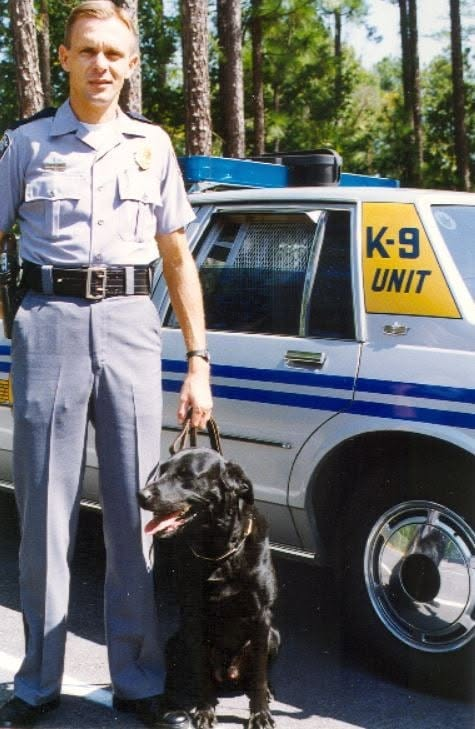
Around 1988, the Highway Patrol paved the way for its first narcotics detection K-9, with Wilson selected to be the patrol’s very first K-9 handler. He was assigned a black Lab-mix named Pinch, who was weeks away from being euthanized at a shelter. Wilson and Pinch spent more than 460 hours in intensive training over 2.5 months at the US Customs and Border Protection Field Operations K-9 Academy in Virginia.
For the first three years, he and Wilson served on the Governor’s RAID Team — which stood for Retaliation Against Illegal Drugs — until the K-9 program moved to the Highway Patrol’s newly formed ACE Team in 1991. Pinch remained the Highway Patrol’s only K-9 until 1995 and served until 1997.
Over the years, promotions took Captain Wilson in and out of Headquarters and District 1, overseeing a pilot program that later evolved into the troop/post concept still in use across the patrol today, and then overseeing the patrol’s Blood-Alcohol Testing — or “BAT Mobile” — program.
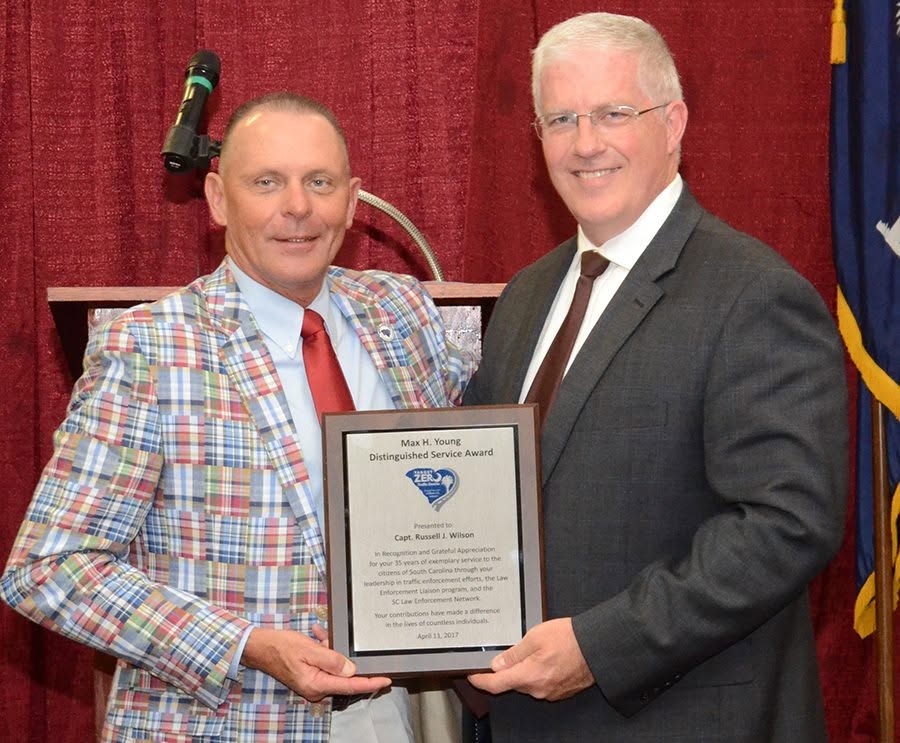
In 2005, he accepted a position within the Office of Highway Safety and Justice Programs (OHSJP) that would propel him into his most well-known role. At that time, the OHSJP Director requested Wilson to serve as a liaison between OHSJP and the troopers in the field, particularly to gain buy-in from troopers for safety initiatives and campaigns. Two years later, he was placed in charge of all the law enforcement liaisons, overseeing the South Carolina Law Enforcement Network.
“Russell is a people person, which made him a good fit for the supervisor position,” OHSJP Director Phil Riley said of Wilson’s position. “So much of what we do in our office and as an agency depends on having strong partnerships. You need a people-person to get buy-in from local law enforcement. Everybody knows Russell and likes him. He’s a very colorful character and he’s not in his shell at all.”
Wilson jokes that while some people have the gift of gab, he inherited a “curse of gab” — which made him a great fit for this position. But he is not just a people-person in the sense of shaking hands and making introductions: He remembers the person behind each introduction and conversation.
“You can call Russell anytime, and he will pick up the conversation right where you left off,” said Johnny Price, who worked with Wilson on the ACE Team and again in OHSJP..
While Wilson’s preferred place is out on the roads, he found a special kind of satisfaction in helping smaller local agencies beef up their traffic enforcement — and proactively save lives.
“You see a lot of death as a trooper,” he said. “But you don’t think about all of the lives you’ve saved through your enforcement, or through helping these other agencies with their enforcement.”
Under Wilson, participation in the annual Law Enforcement Challenge grew to more than 200 participating agencies out of 268 total agencies in the state — a testament to his years of hard work, networking, and persuasion.
Wilson continued to serve as coordinator and supervisor of the network until he retired in 2017. He returned a short while later and was the first officer promoted to the rank of DPS Captain, staying on with DPS until 2020.
“He is one of those people who was in the background and did a lot of stuff that he maybe didn’t get credit for,” said retired Lieutenant Carl Long, one of the original ACE Team members with Wilson. “But that’s the mentality in law enforcement: It’s not all about me; it’s always, ‘We did this together.’”
Wilson’s induction into the Hall of Fame is especially meaningful, coming on the heels of his late brother’s induction last year. He may have followed in his brother’s footsteps by joining the Highway Patrol, but he still forged his own path. The acrylic trophy he held in his hand Wednesday, bearing his name, was a symbol of that.
“This is an honor — something I never dreamed of and never thought about,” Wilson said. “I was just in the right place at the right time, and working with a lot of great people.”