
One of the most dangerous activities people do daily is traveling by vehicle. While you can’t control what other drivers do, you can control what you do. And one of the safest choices you can make for your child in a vehicle is to secure them in a properly sized child safety seat.
When properly installed, child safety seats can reduce the risk of death by 71 percent for infants and 54 percent for toddlers, according to the CDC.
That’s why we urge you — Buckle up, South Carolina. Every trip. Every time.
Child Safety Seat Laws in South Carolina
South Carolina law requires every driver of a motor vehicle operated on the highways and streets of the state to properly secure every child under 8 years old in the vehicle in an appropriate-sized child passenger restraint system.
For all children under the age of 13, the back seat is the safest place for them to ride. They are better protected from head-on collisions, which constitute about 60 percent of all crashes.
In addition, they are not at risk for being injured by the passenger air bag, which is designed for adult protection in conjunction with a seat belt. However, if a motor vehicle lacks a rear passenger seat, or if all of its rear seating positions are occupied by children under eight years of age, a child under eight years of age may be transported in the front seat of the motor vehicle if the child is secured properly in an appropriate child passenger safety restraint system or belt-positioning booster seat as described.
Remember — you are responsible for operating your vehicle in a safe manner so make sure you and your passengers — especially children — are properly buckled up.
Read more information on child passenger safety laws in South Carolina here.
Child Safety Seat Facts
- Car crashes are a leading cause of death for children ages 1 to 13.
- In 2024, nine children under the age of six were occupants of a vehicle involved in a traffic collision in South Carolina. Only 5 of the 9 children were in a child safety seat.
- In 2017, 325 children under the age of 5 were saved by car seats.
- South Carolina law requires children to be in an approved safety seat until they reach the age of 8 or a height of 57 inches.
Child Safety Seat Selection
Car seats and booster seats are the basic protection systems for passengers who are too small to get the full safety benefits from adult seat belts. The goal of car seats is to provide small children with the same protection, or better, that adults obtain from seat belts and other safety equipment built into a vehicle. They are designed to keep children within the vehicle and close to their original seating position to prevent contact with harmful interior surfaces or other occupants and to provide “ride-down” by gradually decelerating the child as the vehicle deforms and absorbs energy from crash forces. For this to work properly, the right seat must be selected for the child’s height, weight, and developmental levels.
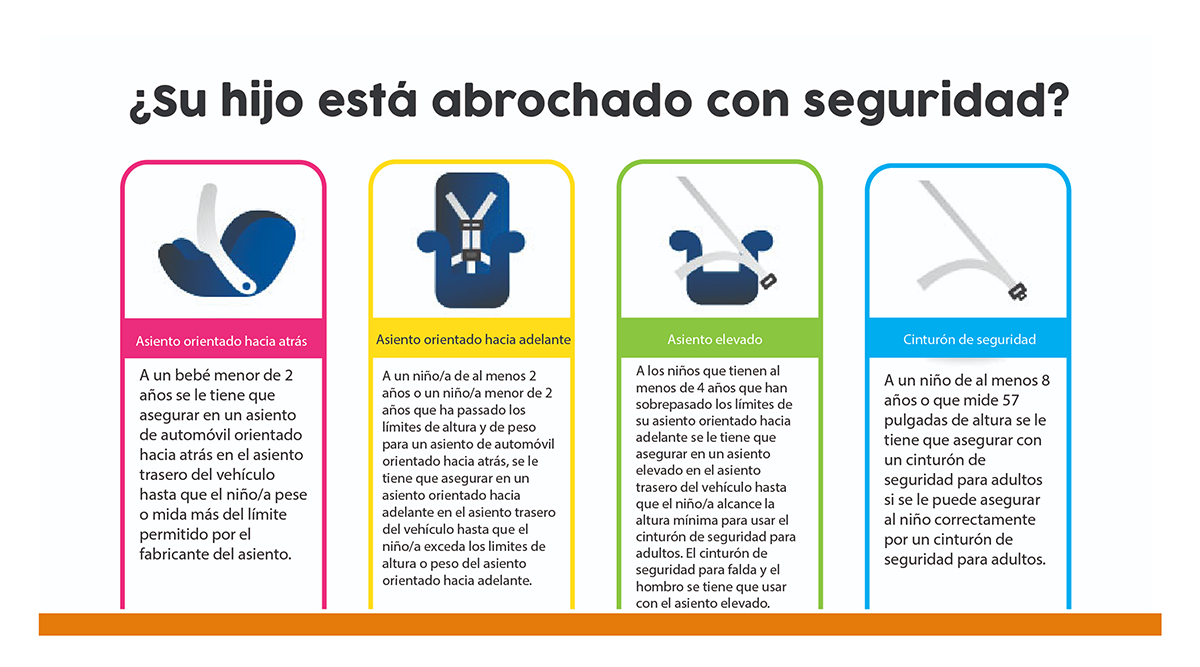
Rear Facing Car Seat
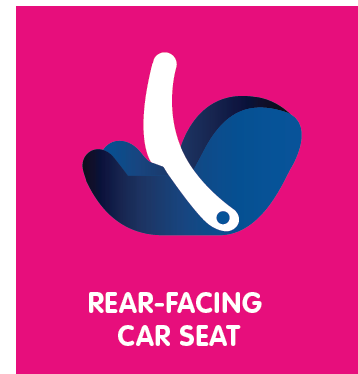
An infant under two (2) must be secured in a rear-facing car seat in a rear seat of the vehicle until the child exceeds the height or weight limit allowed by the manufacturer of the car seat.
Foward Facing Car Seat
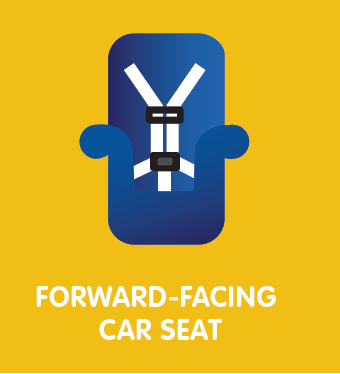
A child at least age two (2) or under two (2) who has outgrown the manufacturer’s height or weight limits for a rear-facing car seat must be secured in a forward-facing car seat in a rear seat of the vehicle until the child exceeds the highest height or weight requirements of the forward-facing car seat.
Booster Seat
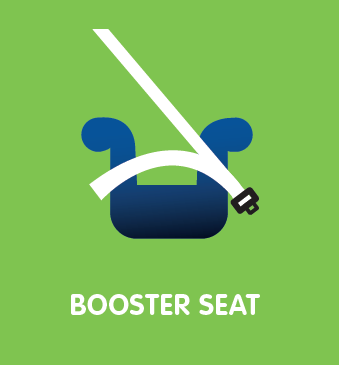
Children at least age four (4) who have outgrown their forward-facing car seat must be secured by a booster seat in a rear seat of the vehicle until the child can meet the height and fit requirements for an adult safety seat belt. Lap and shoulder belts must be used.
Seat Belt
A child at least age eight (8) or at least 57 inches tall may be restrained by an adult safety belt if the child can be secured properly by an adult safety seat belt.
Download the full Child Safety Seat Selection Guide here - English - Espanol
Preventing Heatstroke For Child Passengers
Over the past 25 years, more than 950 children have died of heatstroke because they were left or became trapped in a hot car, according to NHTSA.gov. It’s important for everyone to understand that children are more vulnerable to heatstroke and that all hot car deaths are preventable. We urge parents and caregivers to look before you lock to ensure that children are not left unattended in a vehicle. Read additional information on preventing heatstroke for child passengers here.
Frequently Asked Questions
- Where can I get a free car seat inspection?
South Carolina Department of Public Health (DPH) offers free inspection stations throughout the state. Find a location near you by visiting this webpage and selecting the “Get Your Car Seat Checked by a Certified Technician” button at the top of the page. To make an appointment, select a location, call the number provided, and request an appointment for a car seat safety check.
- How do I select the correct car seat for my child?
Are you curious if your child is in the right car seat? Check out this NHTSA calculator. Simply input your child’s birth date, height, and weight and you’ll see if they need to be in a rear-facing, forwarding-facing, booster or seat belt.
- What does South Carolina state law say about child safety seats?
Read South Carolina child passenger restraint system laws in the South Carolina Code of Law Section 56-5-6410 through Section 56-5-6420.
Ley del asiento del automóvil para proteger a los niños de pasajeros de carolina del sur.
- Direction of Car Seat
Many children are advanced to the next seat stage before they are truly ready, which puts them at greater risk for injury in a crash. NHTSA suggests that children should ride rear-facing to the upper limits of their seats, and convertible seats with higher rear-facing weight and height limits allow many children to ride rear-facing well past the age of two (2). Children are also being moved prematurely from harnessed car seats into booster seats, as well as from booster seats into adult seat belts, which puts them at greater risk for injury if the seat belt does not fit them correctly.
- Location of Car Seat
For all children under the age of 13, the back seat is the safest place for them to ride. They are better protected from head-on collisions, which constitute about 60 percent of all crashes. In addition, they are not at risk for being injured by the passenger air bag, which is designed for adult protection in conjunction with a seat belt. Familiarize yourself with the location of the air bags in your vehicle, with the help of you vehicle owner’s manual. A rear-facing car seat should NEVER be placed in front of an active air bag. When considering the best location for your child’s car seat, you should also consider the needs of other passengers who ride in the vehicle and the seating position that will provide an optimal installation for your child’s car seat. The middle seat in the back is often referred to as the ‘best’ seat for car seats because of the protection from side impact crashes, but any back seat position is a preferred location to install car seats. Also consider the needs of your family; for example, if you often park on a busy street, place your child’s car seat on the curb side as opposed to the street side for optimal protection for you and your child when entering and exiting the vehicle.
- Installation of Car Seat
It is estimated that 46% of car seats on America’s roads are installed incorrectly (NCRUSS, 2015). A car seat that is incorrectly installed will not provide optimal protection in a crash situation, and may put your child’s safety at risk. While great strides have been made in reducing child fatalities and injuries since the 1970s, over half of children killed in crashes are either improperly restrained or completely unrestrained (FARS, 2015). Car seats can be installed with either the seat belt or the lower anchors, and forward-facing seats should always utilize the tether. Seat belts in vehicles made after model year 1996 will have a locking mechanism, which enables the seat belt to be locked to install car seats. This is most often achieved by a locking latchplate or switching the retractor into locking mode in order to lock the seat belt. Lower anchors are standard in vehicles manufactured after 2002, and are generally U-shaped metal anchors that are located in the bight (crack) of the vehicle seat. Current car seats come equipped with lower anchor webbing and attachments, which when threaded through the correct belt path and securely fastened onto the anchors, create a secure installation for that car seat. While the systems are different, they are equally safe, and it’s recommended to use the seat belt or lower anchors-but NOT both. Most car seats have not been tested with both systems used together, so please consult both the vehicle owner’s manual and car seat instructions for help. Tether non-use in forward-facing car seat installation is one of the most common installation errors, yet correct use can significantly decrease the risk of head injuries in a crash.
Read more information on correctly installing child safety seats from the National Highway Traffic Safety Administration:
- Correct Harnessing
Correct harnessing or seat belt fit ensures your child is securely positioned in a car seat, booster seat, or vehicle seat, and is able to take advantage of the crash protection that the harness or belt provides. The harness holds the child down low in the car seat, so he/she does not slide up and out of the car seat in a crash. Incorrect harnessing- often a loose harness or a retainer clip that is too low-is an extremely common misuse. Correct seat belt fit, for children in boosters or transitioning out of boosters, is very important and also a common error.